
For most whole-house repipes, PEX (flexible plastic water pipe) is the faster, less invasive choice and costs less to install. Copper still makes sense for exposed lines, outdoor runs and homeowners who want metal pipe. In Anaheim, Orange and the rest of Orange County, hard water and aging copper often decide it, so here is how we help homeowners choose.
PEX vs Copper at a Glance
Both pipes carry clean drinking water, and both are allowed by plumbing codes for a home repipe. The difference is in how they go in, how they handle your water and what they cost to install.
| Question | PEX | Copper |
|---|---|---|
| What is it? | Flexible plastic tubing | Rigid metal pipe |
| How joints are made | Crimp or expansion fittings, no flame | Soldered with a torch |
| Wall and ceiling openings | Fewer, since it bends around framing | More, since each turn needs a fitting |
| Hard water and scale | Resists mineral build-up | Can scale and pit over time |
| Sunlight | Must be kept out of direct sun | Fine in sun |
| Noise | Quieter, softens water hammer | Can bang and tick |
| Material cost | Lower | Higher |
| Install time | Shorter | Longer |
Neither one is wrong. The right choice depends on your home, your water and how long you plan to stay.
Why So Many Orange County Homes Need a Repipe
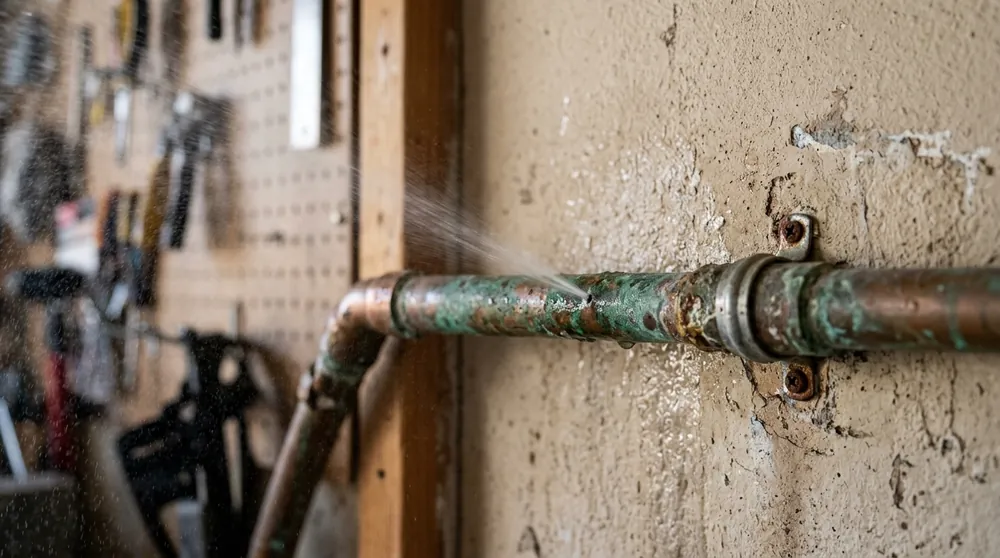
Many Orange County neighborhoods filled with single-story tract homes in the 1950s, '60s and '70s. Most sit on concrete slabs with copper lines under the floor or in the walls. Those pipes are now decades old.
Much of Orange County gets a mix of Colorado River and State Water Project water. It is hard water, so minerals build up inside pipes over the years. Age, scale and water chemistry thin copper from the inside. That is how pinhole leaks start.
Older areas like Old Towne Orange add another problem. Some homes there still have galvanized steel lines, which rust from the inside and choke water pressure.
Signs your home may be ready for new lines:
- Pinhole leaks that keep showing up in copper
- Brown or rusty water when you first turn on a tap
- Weak pressure at every fixture, not just one
- More than one slab leak in a few years
- Green or white crust on pipe joints under sinks
If you see two or more of these, patching one leak at a time usually just moves the problem down the line.
The Case for PEX in a Whole-House Repipe
PEX is the pipe we install most often in repipes. The main reason is how it goes into a finished home.
It bends, so we open fewer walls
PEX comes in long coils. It bends around studs and joists, so one run can reach a bathroom with few joints. Copper needs a fitting at every turn, and each fitting means more access holes in drywall.
It resists the scale our water leaves behind
The Plastics Pipe Institute's Residential PEX Design Guide, prepared by Home Innovation Research Labs, states that PEX "will not pit or stress corrode." It also says PEX's smooth inside wall makes it resistant to mineral build-up. In hard-water areas, that matters.
It is quieter
Copper can bang when a valve shuts fast. That bang is called water hammer. PEX flexes slightly and softens it, so many homeowners notice quieter pipes after a PEX repipe.
No torch inside your walls
PEX joints are made with crimp rings or expansion fittings. There is no open flame near framing, insulation or wiring.
Watch-outs with PEX
- PEX must be kept out of direct sunlight. Exposed outdoor runs need cover or copper.
- In some homes, rodents chew plastic lines in attics. Sealing entry points helps.
- Fittings must be installed with the right tool and checked. A good installer pressure tests every joint before walls close.
The Case for Copper
Copper has been the standard for decades, and it still has a place.
- Exposed and outdoor lines. Copper handles sunlight and looks clean where pipe stays visible.
- Homeowners who prefer metal. Some people simply trust copper more and are happy to pay for it.
- Matching existing work. If part of a home was recently replumbed in copper, matching it can keep things simple.
Copper's downsides are cost and wall work. It costs more as a material, takes longer to install and needs more access openings. In very hard or aggressive water, it can also scale and pit over time, which is often why the home needs a repipe in the first place.
What Changes the Cost of a PEX or Copper Repipe
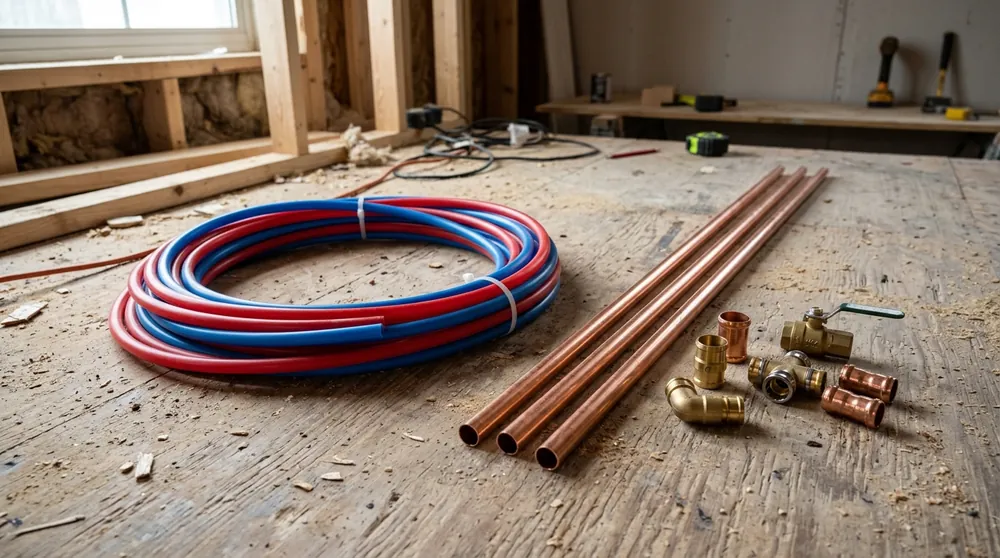
We price every repipe to the home, so we don't publish set prices. These are the things that move the number most:
- Pipe type. Copper costs more as a material and takes more labor than PEX.
- Home size and bathrooms. More fixtures mean more pipe, fittings and hours.
- One story or two. Two-story homes need lines run between floors.
- Attic and wall access. An open attic makes routing simple. Finished or tight spaces add labor.
- Drywall patching. What is included varies by job, so we spell it out in your quote.
- Extra work found on the day. A failing shut-off valve or old water heater connection may be worth replacing at the same time.
The fastest way to a real number is a free phone quote. Tell us your home's size, number of bathrooms, the pipe you have now and the problems you see.
How Hard Water and Heat in the Central Valley Change the Choice
Homes from Bakersfield to Fresno face the same hard water, plus long, hot summers. Many valley homes run water lines through the attic. In July, that attic can get very hot.
PEX is made for hot water, but lines in a hot attic should still be covered and kept away from sunlight through vents. Copper handles the heat well but costs more to run over long attic distances.
In newer tracts around Fresno, Clovis and Bakersfield, many water lines sit under the slab. When those lines start leaking, a repipe that moves the water lines up into the attic or walls can end the cycle of slab leaks. PEX is often the practical choice for that kind of reroute, because it bends where the new path needs to go.
When to Call a Professional
A whole-house repipe is not a DIY job. Here is where homeowners can help, and where to stop.
What you can do yourself:
- Find your main shut-off valve and make sure it turns.
- Note which taps have weak pressure or rusty water.
- Look under sinks and in the garage for green crust or drips.
- Check your water bill for a steady rise you can't explain.
Where to stop and call:
- Any leak inside a wall, ceiling or under the floor
- A second pinhole leak in copper within a year
- Rusty water that doesn't clear after running the tap
- Any plan to cut into or reroute supply lines
A plumber can tell you whether one repair will hold or whether the whole system is wearing out. We check that your lines are truly failing before we suggest a repipe over a single repair.
What to Expect During a Repipe
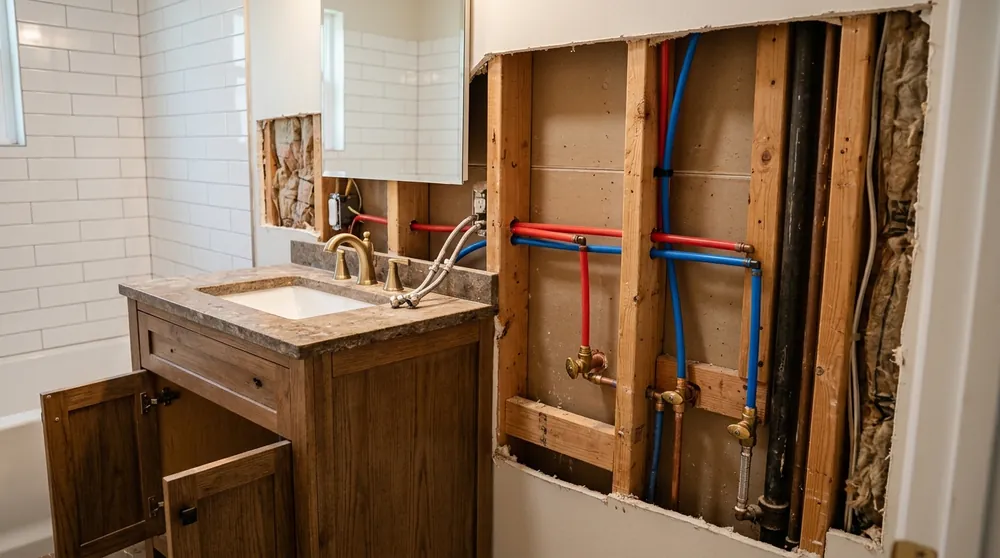
Many families stay home during a repipe. Your water is off during parts of the work, and some rooms have open walls for a few days. Here is how it usually goes:
- Free phone quote. You describe the home, and we explain PEX and copper for your house.
- Plan the routes. We map where new lines will run so we open as few walls as possible.
- Install new lines. New pipe runs through the attic and walls to each fixture.
- Switch over and test. We connect each fixture and test every joint for leaks.
- Patch and clean up. We close access openings as agreed in your quote.
How long it takes depends on the size of the home, the number of bathrooms and how easy the attic is to work in. We walk you through the schedule when we quote, so you can plan around it.
PEX or Copper Repiping in Anaheim, Orange and the Central Valley
Orange Independent Plumbing Services installs both PEX and copper. We explain how each fits your home, your water and your budget, then let you choose. We work across Orange County, with a focus on Anaheim, Orange and Tustin, and in the Central Valley from Bakersfield to Fresno.
We are family-owned since 2015 and licensed and bonded under California license C-36 #1005919. Military and law enforcement households get 10% off.
Learn more about our whole-house repiping in Orange County, or if one leak under your floor started all this, see our slab leak repair page. Then contact us for a free phone quote.