
Most toilet problems, like a toilet that runs, refills on its own or flushes weakly, can be fixed with a new flapper, fill valve or wax ring. Replace the toilet instead when the bowl or tank is cracked, when it clogs over and over, or when an old water-hungry model keeps needing parts. From Bakersfield to Fresno, toilet repairs and leaks are some of the most common calls our family-owned team gets, so here is how we help homeowners decide.
Common Toilet Problems and What Usually Fixes Them
Start by matching what you see to the likely cause. This table covers the calls we hear most in the Central Valley.
| What the toilet is doing | Usual cause | Repair or replace? |
|---|---|---|
| Runs or refills by itself | Worn flapper or fill valve set too high | Repair |
| Weak or incomplete flush | Clogged rim holes, low water level, partial clog | Usually repair |
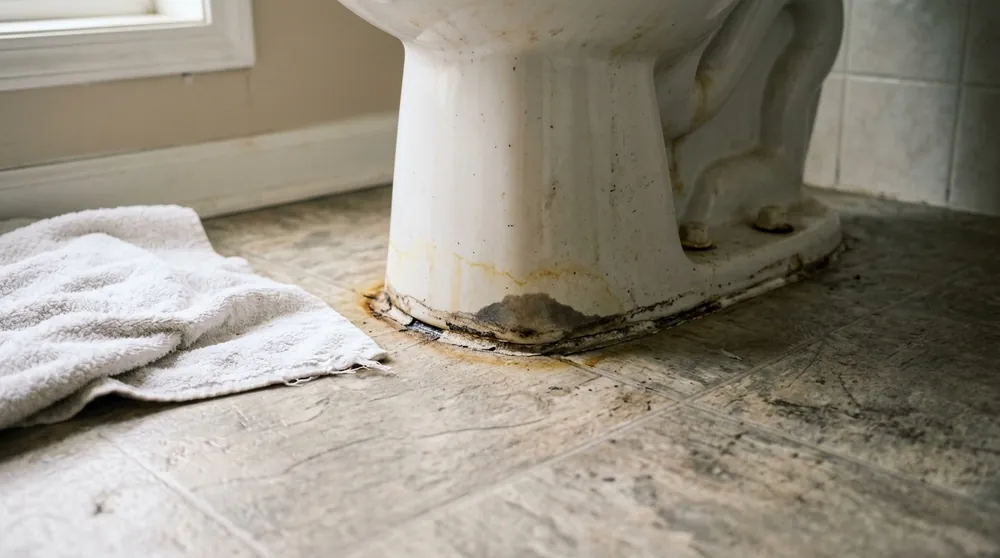
| Water around the base | Failed wax ring or cracked flange | Repair, check the floor |
| Rocks when you sit | Loose bolts, broken flange or uneven floor | Repair |
| Drip from under the tank | Worn tank-to-bowl gasket or bolts | Repair |
| Crack in the tank or bowl | Porcelain damage | Replace |
| Clogs every week or two | Low-performing older design or a drain problem | Often replace, check the drain |
A repair is the right call most of the time. The parts inside a toilet tank wear out long before the porcelain does.
Why Toilets in the Valley Wear Out Faster
Tap water in Fresno, Bakersfield, Visalia and much of the Central Valley is hard. It carries minerals that leave scale on everything water touches. Inside a toilet tank, that scale stiffens the rubber flapper so it no longer seals, and gums up the fill valve so it doesn't shut off cleanly.
That is why so many valley homes have a toilet that hisses or refills in the middle of the night. It is rarely a sign the whole toilet is bad. It is usually a worn flapper or fill valve, and both are simple to replace.
Many homes in older neighborhoods of Fresno and Bakersfield also still have their original shut-off valves behind the toilet. Those often stick or start to drip the first time someone turns them, so we check them on every toilet job and let you decide whether to swap them.
How to Tell If Your Toilet Is Leaking: The Dye Test
A running toilet is easy to hear. A silent leak is not. The EPA's WaterSense program says an old or worn flapper can silently leak thousands of gallons a year, and it recommends a simple test.
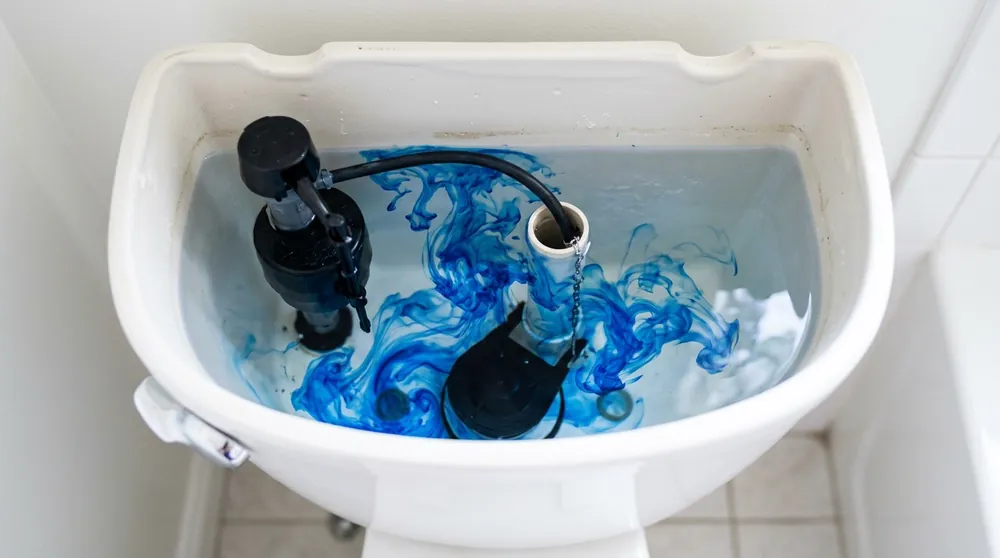
- Take the lid off the toilet tank.
- Add a few drops of food coloring to the tank water.
- Don't flush. Wait 10 minutes.
- Look in the bowl. If any color shows up, water is leaking from the tank into the bowl.
Color in the bowl almost always means the flapper is not sealing. A new flapper is a small part, and the EPA suggests checking it now and then and replacing it at least every five years.
When a Toilet Repair Makes Sense
Repair the toilet you have when:
- It runs or refills on its own. A new flapper or fill valve stops it.
- The flush is weak. Scale in the rim holes or a low water level is often the cause.
- It rocks. Tightening the bolts or repairing the flange, the ring that holds the toilet to the drain, fixes it if you catch it early.
- Water drips from under the tank. New tank-to-bowl bolts and a gasket stop the drip.
- The porcelain is sound and you like the toilet. There is no reason to replace a good bowl because of a worn part.
A rocking toilet deserves quick attention. Each wobble strains the wax seal underneath, and once that seal breaks, water leaks onto the subfloor every time you flush.
When Replacing the Toilet Is the Better Call
Replace the toilet when:
- The tank or bowl is cracked. Porcelain can't be repaired safely. A hairline crack below the water line will leak, and a crack in the tank can split open.
- It clogs again and again. If the drain line checks out fine, an older toilet design may simply not clear the bowl well. A new toilet often ends the plunger routine.
- It is an old, water-hungry model. Older toilets can use as much as 6 gallons per flush, according to EPA WaterSense. Toilets with the WaterSense label use 1.28 gallons or less, and the EPA says replacing older toilets with them can cut toilet water use by 20 to 60 percent.
- You keep paying for parts. If the same toilet has needed a flapper, a fill valve and a wax ring in a short span, a new toilet may cost less over time.
- You are already updating the bathroom. It is the easiest time to change the toilet height or style.
What to Check Before You Buy a New Toilet
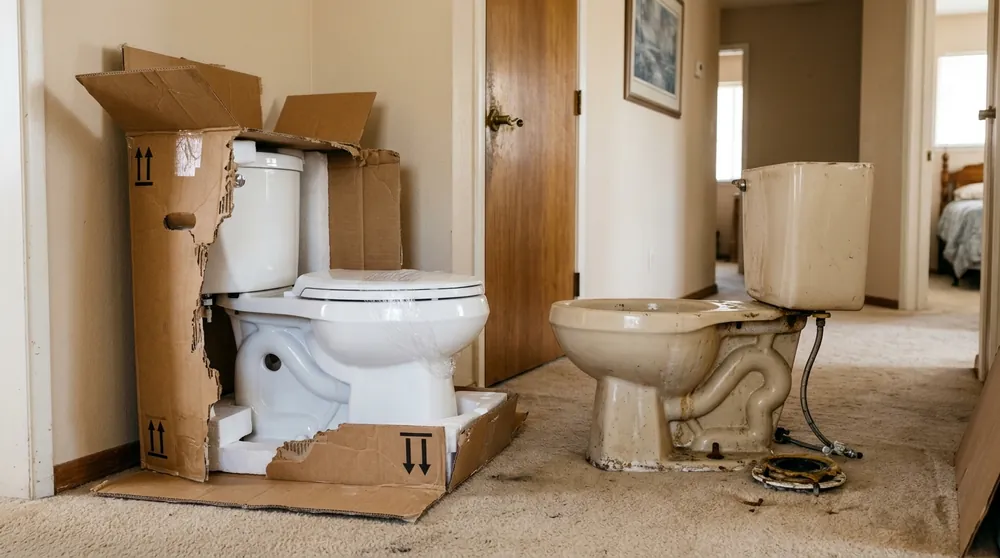
If you plan to buy your own toilet and have us install it, check these first so it fits on the day:
- Rough-in distance. Measure from the wall behind the toilet (not the baseboard) to the center of the bolts at the base. Most homes are 12 inches, but some older homes are 10 or 14.
- Bowl shape. Elongated bowls are more comfortable but stick out about 2 inches farther than round ones. In a small valley bathroom, that can matter.
- Height. Comfort-height toilets sit a few inches taller, which many people find easier to use.
- The water label. Look for the WaterSense label so you get the lower water use.
Keep the box and papers until the job is done. When you call for a quote, tell us the brand and model, and we will tell you whether it needs extra parts to fit your valve and drain.
What Happens on a Toilet Repair or Replacement Visit
When you call our Central Valley line, we start with a free phone quote. Tell us what the toilet is doing and whether you already have a new one.
On the day, we shut off the water and check what's hidden: the shut-off valve, the supply line, the flange and the floor around it. If a valve is seized or the flange is cracked, we show you before fixing it. A full toilet replacement usually takes about 1 to 3 hours, longer if the flange or the floor under it is damaged. We finish by flushing several times and checking for drips.
Toilet Repair and Replacement From Bakersfield to Fresno
Orange Independent Plumbing Services repairs and replaces toilets, faucets and sinks across the Central Valley, including Fresno, Clovis, Visalia, Bakersfield and nearby towns, and across Orange County too. We are family-owned since 2015, licensed and bonded under California license C-36 #1005919, and military and law enforcement households get 10% off.
See our toilet and faucet replacement service, or if water is pooling around the base and you suspect the drain, our general plumbing repair page. Then contact us for a free phone quote.